
Australia Bushfire First Aid Tips

Open seed follicles of Banksia serrata cones on a burnt tree branch following a bushfire in Sydney woodland, NSW, Australia

Novenber 21, 2023

The brave efforts of the emergency services continue to bring relief to the Australian communities facing bushfire threats.

First Aid for Burns

The first priority in managing a burn is to stop the burning process, cool the burn (which will provide pain relief) and cover the burn.

  • Ensure safety of both the rescuers and bystanders from dangers such as flames and smoke.
  • Do not enter a burning or toxic atmosphere without appropriate protection.
  • Move the casualty to a safe environment as quickly as possible.
  • Stop the burning process—stop, drop, roll and cover:

- Smother the flames with a fire blanket or blanket - Move away from the burn source - Cool the area with water preferably, if no water is available use a hydrogel product (such as burnaid)

  • Assess airway and breathing immediately.
  • Wherever possible remove jewellery, watches and clothing from the burnt area.
  • DO NOT—peel off clothing stuck to the burn, use ice or ice water, break blisters, or use ointments, creams or powders.
  • Where possible elevate the limb to reduce swelling.
  • Cover the area lightly with a non-stick dressing.
  • All infants or children with burns should be medically assessed.
A man in a medical mask to protect the cuts of breath against the backdrop of severe forest fires. The concept of fires in Australia.

How to treat smoke inhalation

Although many people associate fire casualties with heat and flames, smoke inhalation is actually the leading cause of death among those who get caught in fires.

Symptoms
  • Dizziness and confusion
  • Nausea or vomiting
  • Visible signs of ash and smoke around the mouth and nos
  • Grey or black saliva
  • Chest pain or tightness
  • Unconsciousness
  • Irregular breathing
  • Wheezing, shortness of breath or hoarse voice
  • Blurred vision
  • Numbness or tingling in the extremities
  • Burns inside the mouth, throat or nose

Treatment

  1. Get the person to safety and into fresh air if it is safe for you to do so.*
  2. If someone is showing the above symptoms you should call 000.
  3. If conscious: sit the person down or lay them on their side.
  4. If alert ask the person whether they have any medical conditions.
  5. If they are not breathing perform CPR.
  6. Ensure the person seeks medical attention to be assessed for more serious health implications. If left untreated, severe smoke inhalation can be fatal due to complications.

*Note: If it is safe to move someone to safety, filter the smoke for both you and the casualty with a P2 mask or cloth (cloth nappy or muslin work well).

Treating smoke inhalation in someone who has asthma
People with asthma may have a more severe reaction to smoke inhalation than other people. If the person is conscious apply the following plan. Asthma First Aid Plan Step 1: Sit the person comfortably upright. Be calm and reassuring. Do not leave the person alone. Step 2:

  • Without delay give 4 separate puffs of a “reliever”. The medication is best given one puff at a time via a spacer device. If a spacer is not available, simply use the puffer.
  • Ask the person to take 4 breaths from the spacer after each puff of medication.
  • Use the victim’s own inhaler if possible. If not, use the first aid kit inhaler if available or borrow one from someone else.
  • The first aid rescuer should provide assistance with administration of a reliever if required.

Step 3: Wait 4 minutes. If there is little or no improvement give another 4 puffs. Step 4: If there is still no improvement, call an ambulance immediately. Keep giving 4 puffs every 4 minutes until the ambulance arrives. Note: If someone is showing signs of a severe asthma attack you should call an ambulance immediately and follow this Asthma First Aid Plan until it arrives. For more information about asthma, read our article, What is Asthma?.
Similar Article Like This

Symptoms of Heat Cramp Lead
First Aid for Heat Cramp

October 25, 2021

Seasonal Concerns

Heat cramps are the body’s way of signalling an oncoming heat emergency. First aid treatment for heat cramps is best done promptly, the aim being to avoid the symptoms progressing to heat exhaustion.
Full Article
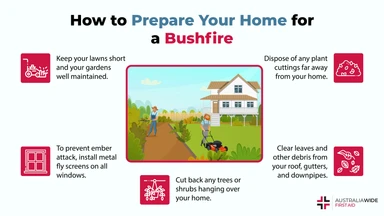
Infographic about how to defend your home in a bushfire
Prepare Your Home for a Bushfire

November 1, 2013

Seasonal Concerns

Bushfires impact different parts of Australia over the entire year. As such, it is important to have your home prepared against bushfire threats, as this will go a long way to protect the safety of you and your loved ones.

Full Article
Christmas Lights
Decorating Safety

December 1, 2014

Seasonal Concerns

Ladders are not the only cause of injuries in the festive season. For example, last summer, 23 New Zealanders visited hospital emergency with a plastic cricket bat injury

Full Article