

7 Easy Tips on How to Start Exercising for Beginners

Exercise is a subcategory of physical activity that is usually done to work on the entire body or any body part separately. Exercise is usually a planned activity with a structured program to adhere to.
There is evidence that regular physical activity is highly effective in preventing chronic diseases such as cardiovascular disease, diabetes, obesity, depression, and many more, leading to a longer life span. We do it to remain healthy and feel more energetic every day, and be mentally sharper and happier.
Even though you know it’s good for you, it can be hard to start exercising, especially if it does not form part of your daily ritual. Don’t get discouraged, though.
Today we have provided 7 easy-to-follow tips on how you can get started, get motivated, stick to it and, hopefully… fall in love with it!
Step number one is to get clear on why you want to start exercising. For some, it’s long-term physical health, for others it’s mental health.
If you are told by your friend, relative, or doctor that you must start exercising, but you are not mentally ready for it - think about the cost of inaction - “Where will I be in 5 years if I don’t start now?”
Let’s use the 5 Whys technique:
For example,
Turns out we don’t just want to be healthy - there is always a much deeper reason for it. Keep questioning yourself until you get to the real why.
It’s time to set fitness goals, specifically, SMART goals. This exercise will help you decide on what exactly you want to work towards and what your success is going to look like.
The SMART acronym stands for:
Choose a time frame (30 days, 90 days or 6 months) and set the goals before doing anything else.
There are 4 main types of exercise you should be doing to get the most out of being active:
You should have set your goals and found your reason for doing it by now.
Next, choose any activity you enjoy and decide where you are going to do it. It’s better to start with something easy and get used to doing it consistently. Your objective number one is to create a routine and stick to it.
If you want to learn about strength training, it is better to sign up for the gym.
Outdoors is usually great for endurance training, such as running or cycling, or some high-intensity workouts in nature (if the weather is good).
It’s up to you what you do as long as you are consistent.
The right workout clothes can boost your motivation to do well and show up to every training session. A cool pair of running shoes or perfect-fitting gym leggings will not only improve your performance but will also help you get going when you don’t feel like it.
Pick something that you feel good in - for example, loose clothing is great for comfort and lets your body breathe as you move.
You may be reluctant to start a fitness program because you simply:
It’s okay not to know! Start with something as simple as this (example using running):
Alternatively, hire an in-person Personal Trainer and ask them for a custom training plan. Get them to teach you the exercises you don’t know and keep you accountable. Hiring a PT could change your life.
Focus on eating a balanced diet containing fruits, vegetables, dairy or dairy alternatives, beans, grains, fish, eggs, meat and other protein.
If your fitness goal is weight loss, you want to be aware of your calorie intake. If you eat an unhealthy diet which is usually high in calories and saturated fats, you feel sluggish and unmotivated to work out.
If you don’t do any exercise, you feel even more tired and bored and crave more food, creating a vicious cycle and slowing down your progress.
Here’s a quick example. Imagine you need to lose 10 kilograms. To lose weight you need to know how many calories you consume on your regular day, and, if that number is too big - you need to cut down on calories.
Otherwise, you will still be in a calorie surplus which means any extra food you eat (even with plenty of training) will be stored as fat.
If you are not sure how to figure it out yourself, ask a Personal Trainer or Nutritionist for advice.
Take one step at a time and remember that hard work will pay off. Give it about 3 months of trial and error and try not to expect too much from yourself - you don’t need pressure.
Your physical performance and energy levels will start improving from week 1 - hopefully, this will be enough to keep you motivated until you start experiencing other benefits.
Documenting your journey and tracking progress can boost motivation, too, however, don’t get too obsessed with it - sharing a gym selfie and weighing yourself once a week will suffice.
Exercise is an important measure for safeguarding our physical and mental wellbeing.
It can be hard to start exercising regularly, especially if exercise does not form part of your daily routine.
To start exercising and stick to it, the key is to treat yourself with patience and kindness.
If you would like to learn more about the benefits of healthy eating and regular exercise, book a First Aid course with us today, and check out the following articles in our Resource Library:
August 25, 2022
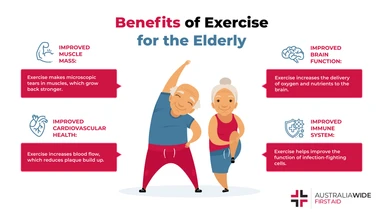
Exercise can improve our physical and emotional well-being in numerous ways. For instance, exercise can improve the function of our immune system. Exercise is especially important for the elderly - as we age, our risk of chronic health conditions increases dramatically.
July 29, 2022
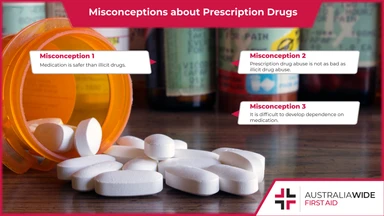
Prescription drug abuse occurs when medication is used inappropriately or in a way not originally intended by a healthcare professional. Medication abuse can take many forms. Examples include using a friend’s medication to relieve your own pain or trying to get high off a prescription drug.
July 28, 2022
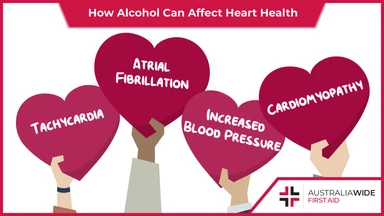
Alcohol is a depressant that can cause an increase in heart rate and blood pressure, and thereby lead to heart disease. By knowing how alcohol can affect your heart health, you can re-evaluate your drinking habits and safeguard your wellbeing.