
Nappy Rash First Aid

first-aid-for-nappy-rash

Novenber 21, 2023

Nappy rash occurs when the skin becomes irritated due to prolonged exposure to moisture.

What is Nappy Rash?

Nappy rash is a form of dermatitis, meaning inflammation of the skin, that occurs because of exposure to moisture along with chemical or mechanical irritants.

Parents and caregivers will come across nappy rash at some point in their parenting and childcare journey. Although it is not life-threatening, nappy rash can be very uncomfortable for the child and can lead to more serious complications, like infection, if left untreated.

In this article, we will discuss ways that you can prevent and treat nappy rash.

What Causes Nappy Rash?

Nappy rash is caused by the exposure of skin to moisture in addition to a chemical or mechanical irritant. Chemical irritants cause weakening and breakdown of the sensitive skin of the bottom and perineum. Mechanical irritants cause damage to the skin via friction.

  • Chemical irritants include urine, feces, lotions, and other products applied to the skin.
  • Mechanical irritants include ill-fitting diapers, tight clothing, and natural skin folds.

If the skin is exposed to moisture for too long or exposed to the skin for a short period of time in addition to a chemical or mechanical irritant, dermatitis can occur.

Signs and Symptoms of Nappy Rash

Visual symptoms of nappy rash include:

  • Redness, or erythema
  • Inflamed skin
  • Shiny, moist skin
  • Scaly patches
  • Blisters or ulcers

Behavioral signs and symptoms in a child with nappy rash include:

  • Crying, fussiness, irritability particularly during diaper changes
  • Pulling, rubbing, or scratching of skin in and around the bottom and perineum
  • Fever (in cases when an infection is involved)

First Aid for Nappy Rash

Prevention

  • Frequently change nappies
  • Avoid skin’s exposure to moisture for prolonged periods of time
  • Use disposable diapers that have moisture-wicking qualities to keep the skin dry
  • Allow the skin to dry completely before replacing a nappy

Treatment

  • Clean the skin with a non-irritating wipe: If your baby has particularly sensitive skin or a painful rash, use a soft cloth with only water. Baby wipes, though generally considered safe, often contain added chemicals that may lead to further irritation.
  • Applying a topical cream, paste, or ointment intended for the treatment of nappy rash: Moisture barrier products contain zinc oxide and/or petrolatum. Products containing zinc oxide come in different concentrations. If the rash is not responding to a product with a lower concentration, switch to products with a higher concentration (40%). Some creams have antifungal or antibacterial qualities to treat sources of secondary infections like yeast. In some cases, a doctor may prescribe a topical steroid cream that reduces inflammation.
  • Continue to implement prevention measures: Frequently change nappies, use disposable diapers and allow the skin to dry completely before replacing a nappy.

When to See a Doctor

  • If the nappy rash does not resolve or improve in 3-5 days with the use of the above measures
  • If the child is showing signs of infection, such as fever, diarrhoea, elevated heart rate, or fast rate of breathing.
  • If the skin is severely affected – oozing, raw, open skin
  • If your baby is in distress

Recommended First Aid Resources and Courses

Given that nappy rash can also be attributed to allergies, the following resources may also be of assistance:
Similar Article Like This

Woman with Man Experiencing Severe Chest Pain
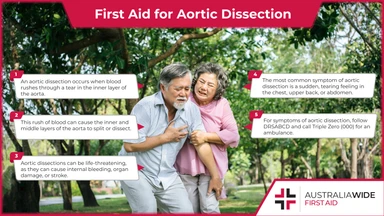
First Aid for Aortic Dissection

June 21, 2022

How-To

An aortic dissection occurs when blood rushes through a tear in the inner layer of the aorta. This can cause the inner layer to split from the middle layer, and result in aortic rupture. As such, it is important to know first aid for aortic dissection.
Full Article
Woman with Constipation
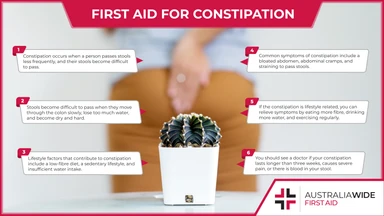
Constipation First Aid

June 17, 2022

How-To

Constipation occurs when a person passes stools less frequently, and their stools become difficult to pass. It is important to know first aid for constipation, as chronic constipation can either lead to, or be a symptom of, ongoing health complications.
Full Article
First Aid Opioid Overdose
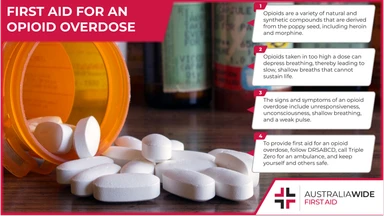
Opioid Overdose First Aid

June 16, 2022

How-To

Opioids are a group of natural and synthetic compounds that have sedative and analgesic effects. They can often lead to dependence. It is important to know first aid for opioid overdoses, as casualties can stop breathing in a matter of minutes.

Full Article